
How to Plan a Professional Corporate Event in Kenya
A successful corporate event is not simply about bringing people together in a well-decorated venue. It is about delivering a professional experience where every presentation is clear, every speaker can be heard, every guest feels comfortable, and the programme runs smoothly from beginning to end.
Whether you are organising an Annual General Meeting (AGM), corporate conference, product launch, awards ceremony, executive meeting, company anniversary or stakeholder engagement forum, the technical aspects of your event play a major role in its success.
Imagine an important presentation where the microphone suddenly stops working. Or an AGM where shareholders cannot read the financial figures displayed on the screen. Perhaps the event programme is running perfectly until a speaker's laptop fails to connect to the LED display.
These situations can interrupt proceedings, waste valuable time and affect the professional image of the organisation.
In Kenya, corporate events are increasingly incorporating advanced audiovisual technology, professional staging, LED screens, livestreaming and sophisticated lighting. While these technologies improve the event experience, they also require proper planning and coordination.
At Gee Events & Entertainment, we understand that successful corporate event production involves much more than supplying equipment. It requires understanding the event objectives, selecting the right technical solutions, coordinating the production team and preparing for unexpected challenges.
This guide explains how to plan a professional corporate event in Kenya while minimising sound, screen, stage and other technical problems.
1. Start With the Event Objective
Before selecting a venue, hiring sound equipment or deciding on LED screen sizes, you need to understand the purpose of your event.
Different corporate events have different technical requirements.
For example, an AGM focuses on clear communication, financial presentations, shareholder participation and structured proceedings. A product launch may prioritise dramatic lighting, impressive visual displays and brand presentation. An awards ceremony requires carefully timed music, lighting cues and smooth transitions between presentations.
Start by identifying the following:
- Event purpose: Are you informing, celebrating, launching a product or engaging stakeholders?
- Target audience: Will guests include executives, employees, shareholders, investors, clients or government representatives?
- Expected attendance: How many people will be physically present?
- Event format: Will it be in-person, virtual or hybrid?
- Venue type: Is it a hotel conference hall, corporate office, outdoor location or purpose-built event venue?
- Programme requirements: Will the event feature presentations, speeches, panel discussions, entertainment or awards? Answering these questions early helps determine the appropriate stage configuration, sound coverage, screen placement, lighting requirements and technical staffing.
A professional corporate event production company in Kenya should understand these requirements before recommending equipment.
2. Match the Technical Setup to the Event Programme
One of the most common corporate event planning mistakes is selecting equipment without carefully reviewing the event programme.
Your technical setup should support every activity scheduled to take place.
Speeches and Executive Presentations
For events involving keynote speakers, company directors or invited dignitaries, clear audio and visual presentation are essential.
The setup may require wireless microphones, a lectern, presentation screens, appropriate stage lighting and a reliable system for switching between different presentation sources.
Speakers should be able to move comfortably without worrying about microphone coverage or screen visibility.
Panel Discussions
Panel discussions require additional planning because multiple people may need microphones simultaneously.
Depending on the format, the setup may include individual microphones for panellists, comfortable executive seating, a moderator's microphone, audio mixing and appropriate camera angles where recording or livestreaming is required.
The stage should provide enough space for the participants without making the arrangement appear crowded.
Awards and Recognition Ceremonies
Corporate awards ceremonies often involve multiple activities taking place within seconds of each other.
A recipient's name appears on the LED screen, background music plays, stage lighting changes, and the individual walks onto the stage for recognition.
To achieve this smoothly, the visual operator, sound engineer, lighting technician and stage coordinator must work together.
A detailed programme with clearly assigned technical cues helps avoid awkward pauses and poorly timed presentations.
Corporate Entertainment
Entertainment is often incorporated into corporate dinners, company anniversaries, product launches and staff appreciation events.
Live bands, DJs, cultural performances and other entertainment activities may require additional sound equipment, stage space, lighting and technical rehearsals.
Planning these requirements in advance prevents last-minute changes to the production setup.
Livestreaming and Hybrid Events
Some corporate events need to reach audiences beyond the physical venue.
For example, an organisation may need to livestream an AGM to shareholders in different locations or allow remote participants to follow a conference.
A hybrid event may require:
- Professional cameras and camera operators
- Video switching and streaming equipment
- Reliable internet connectivity and a suitable backup
- Clear audio feeds from the main sound system
- Presentation sharing
- Remote participant audio integration
- Recording and technical monitoring The livestream should be planned as an integral part of the event, not added at the last minute.
3. Plan Your Sound System Early
Poor sound is one of the quickest ways to undermine an otherwise well-organised corporate event.
Even a beautiful venue with excellent décor can become frustrating when guests struggle to hear speeches or presentations.
Professional corporate sound production focuses on audio clarity, consistent coverage and reliability.
Choose Sound Equipment Based on the Venue
A small executive meeting does not require the same sound system as a corporate conference accommodating hundreds of delegates.
The appropriate system depends on the venue's dimensions, acoustic characteristics, audience arrangement and event programme.
Large halls may require additional speakers to distribute sound evenly throughout the room. Outdoor events may require more extensive speaker coverage and different positioning.
Select the Right Microphones
Different activities require different microphone solutions.
A podium speech may use a gooseneck or lectern microphone, while panel discussions can benefit from individual handheld, tabletop or lapel microphones.
For active presenters who move around the stage, a wireless headset or lapel microphone may be more practical.
Microphone selection should prioritise speech clarity, reliability and ease of use.
Conduct Proper Sound Checks
Sound equipment should be tested before guests arrive.
The technical team should check microphones, speaker levels, presentation audio, audio playback sources and potential interference.
Where possible, key speakers should test their microphones before the event begins.
Planning tip: Always arrange for a qualified sound engineer to remain available throughout important corporate proceedings.
For further guidance, explore our professional sound systems and audiovisual production services.
4. Plan LED Screen Visibility and Corporate Branding
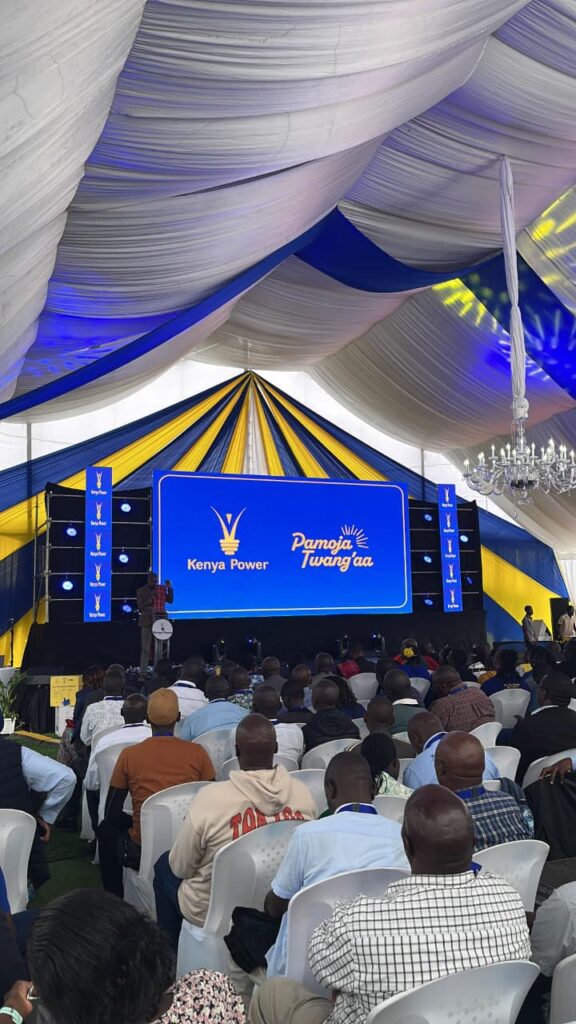
Corporate events increasingly rely on LED screens to communicate information and reinforce brand identity.
From financial presentations and company achievements to sponsor recognition and live camera feeds, screens have become an important part of professional event production.
However, simply installing a large screen does not guarantee a good viewing experience.
Choose the Right Screen Size
The LED screen should be appropriate for the venue and audience.
Important considerations include the distance between the screen and the audience, the size of the room, content type and available installation space.
For example, an AGM displaying detailed financial information may require a screen configuration that allows figures and text to be read comfortably.
A product launch may require a larger display to create a stronger visual impression.
Position Screens Correctly
Screen placement affects how easily guests can follow the programme.
The screen should not be obstructed by stage equipment, decorations, structural columns or other installations.
For larger venues, additional side screens may improve visibility for guests seated farther from the main stage.
Prepare Corporate Content Professionally
Poorly prepared presentations can affect the overall appearance of an event.
Before the event, confirm that:
- Company logos are clear and correctly proportioned.
- Presentation slides use readable fonts.
- Videos are exported in suitable formats.
- Screen content matches the display dimensions and aspect ratio.
- Sponsor graphics are properly arranged.
- Presentations have been tested on the actual display system. For important events, all visual content should be submitted to the technical team before event day.
Planning tip: Have an approved backup copy of critical presentations available on a separate device or storage medium.
For more information, read our guide on LED screen hire in Kenya and the factors affecting screen size, cost and setup.
5. Stage Design, Seating and VIP Movement
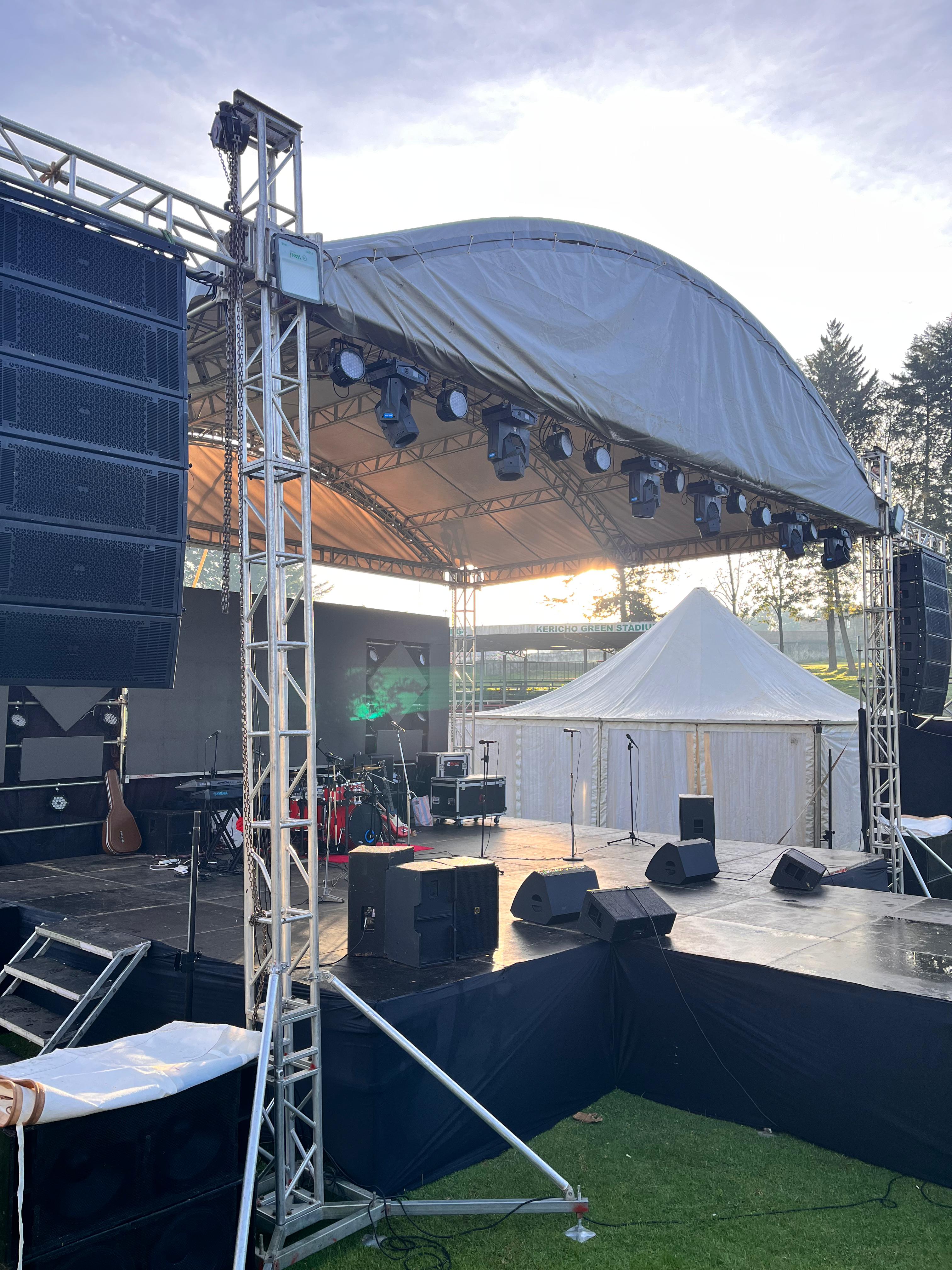
A corporate stage is not simply a platform for speakers. It is the focal point of the event and often forms the visual background for photography, video coverage and organisational branding.
The stage design should reflect the formality, purpose and expectations of the occasion.
Professional Stage Setup
A well-planned corporate stage should provide adequate space for presenters, panellists and other participants.
Its size, height and arrangement should be suitable for the venue and audience.
Depending on the event, the stage may feature a branded backdrop, LED display, lectern, executive seating, lighting and designated entry and exit points.
VIP and Executive Seating
For AGMs, government functions, corporate launches and executive conferences, guest seating requires careful consideration.
VIPs, company directors, senior executives and invited dignitaries may require designated seating areas with clear visibility of the stage.
The layout should also allow guests and speakers to move comfortably without interrupting ongoing proceedings.
Audience Layout and Movement
Seating should support the event format.
A theatre-style layout may be suitable for presentations, while a banquet setup may work better for corporate dinners and awards ceremonies.
Other considerations include accessible walkways, camera positions, emergency exits, technical control areas and catering access.
For larger events, the seating plan should be coordinated with the sound and lighting teams to ensure equipment does not obstruct guest movement.
6. Rehearsals, Technical Checks and Backup Planning
Even the most carefully planned corporate event can experience unexpected challenges.
What distinguishes professional event production is not the assumption that nothing will go wrong, but the preparation to minimise problems and respond quickly when they occur.
Conduct a Technical Rehearsal
A technical rehearsal allows the production team to test important programme sequences before the event begins.
For example, during a corporate awards ceremony, the team can rehearse when the recipient's name appears on the screen, the music begins and the stage lighting changes.
For AGMs, technicians can test presentation transitions, microphone handovers, video playback and remote participation systems.
Test Equipment Before Guests Arrive
Essential checks include microphone functionality, speaker output, LED screen signal, presentation connections, lighting operation, internet availability and power distribution.
These checks should be completed early enough to allow issues to be corrected.
Prepare Backup Power
Reliable power is particularly important for events involving extensive audiovisual equipment.
Depending on the venue and production requirements, backup power may include an appropriately sized generator, UPS systems for critical control equipment or other engineered power arrangements.
The power setup should be planned according to actual equipment loads, safe distribution requirements and venue conditions.
Prepare for Equipment and Signal Failures
A professional production plan should consider alternatives for critical systems.
This may include spare microphones, backup presentation laptops, additional signal cables, alternative playback sources and documented procedures for handling technical interruptions.
Not every event requires identical backup equipment. The appropriate level of redundancy depends on the event's importance, complexity and risk.
Assign Clear Technical Responsibilities
Every technician should understand their role.
The sound engineer manages audio, the visual operator oversees screen content, the lighting technician manages lighting cues, and a designated production coordinator oversees communication between teams.
Clear responsibilities reduce confusion during live proceedings.
7. Corporate Event Planning Checklist
Use this checklist when organising your next corporate event in Kenya.
Corporate Event Checklist
[1] Define the event objectives and expected audience [2] Confirm the venue, date and programme [3] Conduct a venue assessment or site visit [4] Confirm sound system and microphone requirements [5] Determine LED screen size, placement and content [6] Approve stage layout, lighting and seating [7] Confirm livestreaming and recording requirements [8] Confirm power supply and backup arrangements [9] Review transport, installation and breakdown schedules [10] Test all presentations, videos and playback sources [11] Conduct technical checks and rehearsals [12] Assign technical responsibilities and communication channels [13] Confirm contingency and emergency procedures
8. Common Corporate Event Mistakes to Avoid
Several preventable mistakes can affect event quality, even when an organisation has invested heavily in the venue and equipment.
Hiring equipment too late: Delayed equipment booking can limit available options and reduce the time needed for proper technical planning.
Underestimating audio requirements: Choosing speakers based only on price without considering the venue can result in poor sound coverage.
Ignoring screen visibility: Screens that are too small or incorrectly positioned can make presentations difficult to follow.
Failing to test presentations: Compatibility problems between laptops, video formats and display systems can interrupt important presentations.
Overcrowding the stage: Insufficient stage space affects movement, photography and safety.
Working with disconnected suppliers: Poor coordination between sound, lighting, screens, staging and power providers can create unnecessary complications.
Skipping rehearsals: Without testing, technical problems may only become apparent once guests are already seated.
Addressing these issues early can significantly improve event reliability and audience experience.
9. Why Work With a Professional Corporate Event Production Company in Kenya?
Corporate event planning involves many moving parts, and coordinating multiple technical suppliers can place unnecessary pressure on an organisation's internal team.
Working with a full-service event production partner simplifies this process.
Instead of separately coordinating stage contractors, sound engineers, lighting providers, LED screen suppliers and livestreaming technicians, you can work with a team that understands how these elements fit together.
This approach offers several advantages, including improved technical coordination, clearer communication, consistent production standards and more efficient troubleshooting.
It also allows internal event organisers to focus on guest management, stakeholder engagement and the overall programme rather than individual technical issues.
10. How Gee Events & Entertainment Supports Corporate Event Production
At Gee Events & Entertainment, we provide professional audiovisual and event production solutions for corporate organisations, institutions and event planners across Kenya.
Based in Nakuru, we support events in Nakuru, Naivasha, Nairobi, Kericho, Bomet and other locations across the country.
Our corporate event production services include:
- Professional PA and sound systems
- LED screens and visual display solutions
- Stage setup and structural installations
- Corporate lighting and ambience
- VIP seating and executive event arrangements
- Livestreaming and video production
- Tents and event infrastructure
- Power coordination
- Technical operators and on-site production support
Our approach begins with understanding the client's event objectives and technical requirements.
From there, we work on recommending suitable equipment, developing an appropriate production layout and coordinating technical execution.
Whether you are planning a company AGM, corporate launch, executive conference, awards ceremony, stakeholder forum or corporate celebration, our goal is to provide a reliable, professional and well-coordinated event experience.
11. Planning a Corporate Event in Kenya?
A successful corporate event requires more than a good venue and an organised programme.
Sound clarity, screen visibility, professional staging, appropriate lighting, technical rehearsals and backup planning all contribute to the experience your guests will remember.
Investing in proper technical planning can help prevent avoidable disruptions and ensure your organisation is represented professionally.
Planning an AGM, conference, product launch or corporate function?
Let Gee Events & Entertainment help you develop a suitable audiovisual and production setup for your event.
Book a corporate event production planning session.